How Much Is Your Home Worth?
Contact
Remax Reliance
License #: RS277720
License #: 268528
504 Harleysville Pike, Souderton, Pennsylvania, 18064
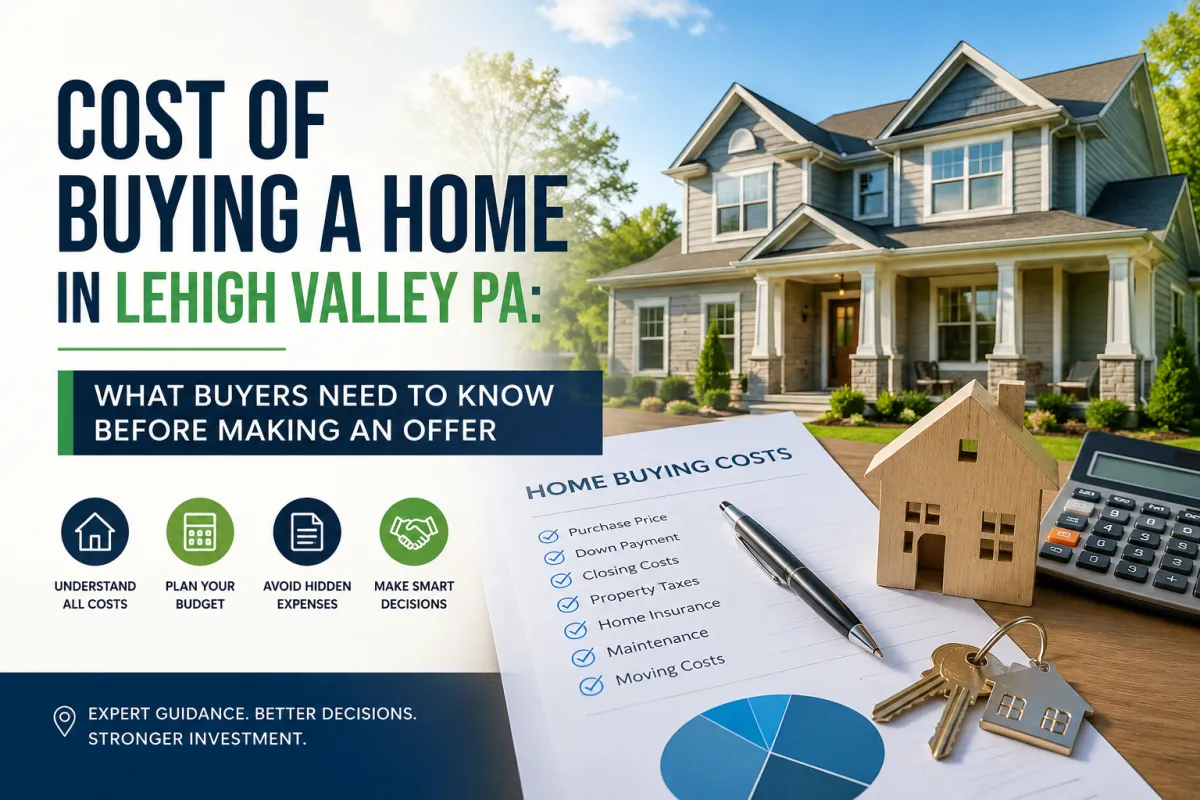
Cost of Buying a Home in Lehigh Valley PA: What Buyers Need to Know Before Making an Offer
Buying a home in Lehigh Valley, Pennsylvania has become increasingly competitive as more buyers move into the region for its affordability, strong job market, and proximity to major cities like New York and Philadelphia. While many people focus on neighborhoods and home styles, one of the most important factors in the home-buying process is understanding the true cost of purchasing a home in Lehigh Valley PA.
Whether you are a first-time buyer, relocating, or investing in property, knowing the full financial picture helps you make smarter decisions and avoid surprises during the buying process.
Working with an experienced local expert such as RJ Timlin can help buyers accurately estimate costs, negotiate better deals, and identify homes that fit both budget and long-term goals.
1. Home Prices in Lehigh Valley PA
The first and most obvious cost is the purchase price of the home. In Lehigh Valley, prices vary significantly depending on location, size, and property condition.
Generally:
Entry-level homes in suburban areas are more affordable
Updated single-family homes in good school districts are moderately priced
Luxury homes and historic properties command premium pricing
Cities like Bethlehem and Allentown typically show higher demand, which can influence pricing trends over time.
Understanding local pricing trends is essential before making an offer, especially in competitive neighborhoods.
2. Down Payment and Mortgage Costs
Most buyers finance their homes through a mortgage, which means the down payment and monthly loan payments are critical parts of the overall cost.
Typical considerations include:
Down payments ranging from 3% to 20% depending on loan type
Interest rates impacting long-term affordability
Loan approval based on credit score and income stability
Even a small change in interest rates can significantly affect your monthly payment over a 15–30 year period.
3. Closing Costs You Should Not Ignore
One of the most overlooked expenses in home buying is closing costs. These are additional fees required to finalize the transaction.
They may include:
Loan origination fees
Title insurance
Appraisal fees
Attorney fees
Recording charges
In many cases, closing costs can add up to a noticeable percentage of the purchase price, so buyers must plan ahead.
4. Property Taxes in Lehigh Valley
Property taxes are another key factor that affects affordability. In Pennsylvania, tax rates can vary by municipality and school district.
Higher-demand areas such as Doylestown may have different tax structures compared to more suburban or developing regions.
Buyers should always evaluate:
Annual tax burden
School district tax rates
Long-term changes in tax assessments
These costs directly affect monthly ownership expenses.
5. Home Insurance and Maintenance Costs
Beyond buying the home, ongoing costs play a major role in affordability.
Homeowners should budget for:
Insurance coverage for property protection
Routine maintenance and repairs
Utility costs (which vary by home size and age)
Older homes may require higher maintenance, while newer constructions may offer lower short-term upkeep costs.
6. Hidden Costs Buyers Often Miss
Many first-time buyers underestimate additional costs such as:
Moving expenses
Immediate renovations or upgrades
HOA fees (if applicable)
Inspection-related repairs
These smaller expenses can add up quickly and should be included in your budget planning.
7. Why Local Expertise Matters
The Lehigh Valley real estate market is highly local, meaning prices and costs can change drastically from one neighborhood to another. A skilled agent not only helps you find a property but also helps you avoid overpaying and identify hidden value.
Working with a professional like RJ Timlin ensures buyers understand:
True market value of homes
Negotiation strategies
Cost-saving opportunities
Long-term investment potential
Final Thoughts
Buying a home in Lehigh Valley PA involves more than just choosing a property—it requires understanding the full financial picture. From mortgage planning to property taxes and hidden costs, every detail impacts your long-term investment.
With the right guidance and market knowledge, and support from a trusted Lehigh Valley real estate expert, buyers can confidently navigate the process and secure the best possible deal in this growing Pennsylvania market.
Frequently Asked Questions (FAQs)
1. Is Lehigh Valley a good place to buy a home in 2026?
Yes. Lehigh Valley continues to be one of Pennsylvania’s fastest-growing real estate markets due to its affordability, job growth, strong school districts, and proximity to New York City, New Jersey, and Philadelphia.
2. What is the average cost of a home in Lehigh Valley PA?
Home prices vary by location and property type, but the region generally offers more affordable options compared to nearby metro areas. Suburban towns tend to be more budget-friendly, while historic and luxury areas command higher prices.
3. Which areas are best for first-time homebuyers in Lehigh Valley?
First-time buyers often prefer areas like Allentown, Bethlehem suburbs, and Quakertown due to affordability, accessibility, and community amenities.
4. Which areas are considered luxury markets in or near Lehigh Valley?
High-end buyers often explore Doylestown, New Hope, and select upscale neighborhoods throughout the region for luxury homes, privacy, and premium amenities.
5. What should I know about nearby towns like Lansdale, Skippack, Collegeville, and Perkasie for home buying?
These towns offer a mix of commuter-friendly suburbs and quiet small-town living, with Lansdale and Collegeville providing strong access and growth, while Skippack and Perkasie offer more peaceful, community-focused lifestyles with varying affordability.
6. Is real estate in Ocean City and Long Beach Island a good investment?
Yes, both Ocean City and Long Beach Island are strong coastal investment markets, especially for vacation rentals and second homes. However, they come with higher entry costs and seasonal demand patterns.
7. Why should I work with a local real estate agent in Lehigh Valley?
A local expert helps you understand pricing trends, negotiate better deals, avoid hidden costs, and identify the best neighborhoods based on your goals. Working with an experienced professional like RJ Timlin ensures informed decisions throughout the buying or selling process.



Disclaimer: All information contained on this website is deemed reliable but not guaranteed. All properties are subject to prior sale, change or withdrawal notice rjtimlin.remax.com believes all information to be correct but assumes no legal responsibility for accuracy.